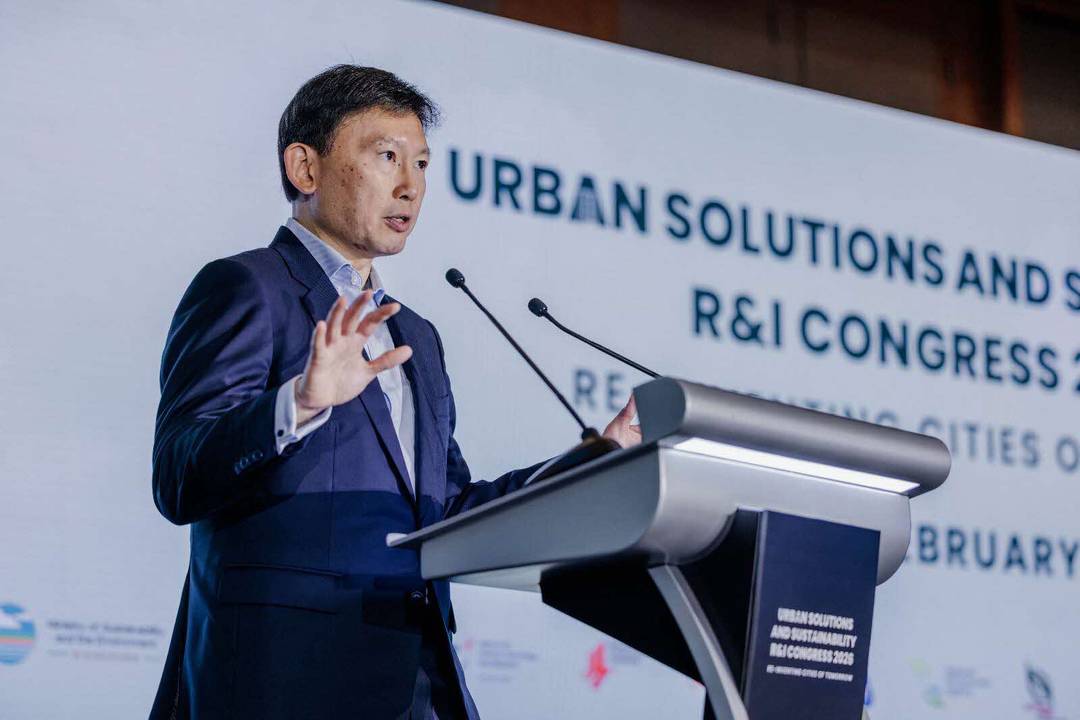
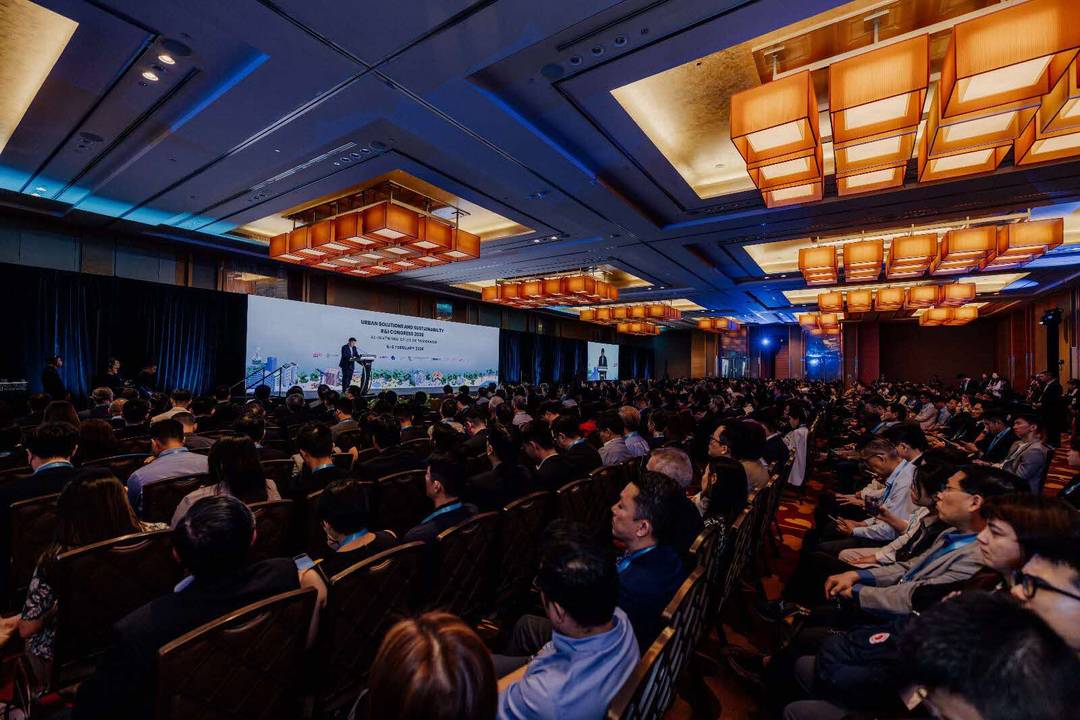
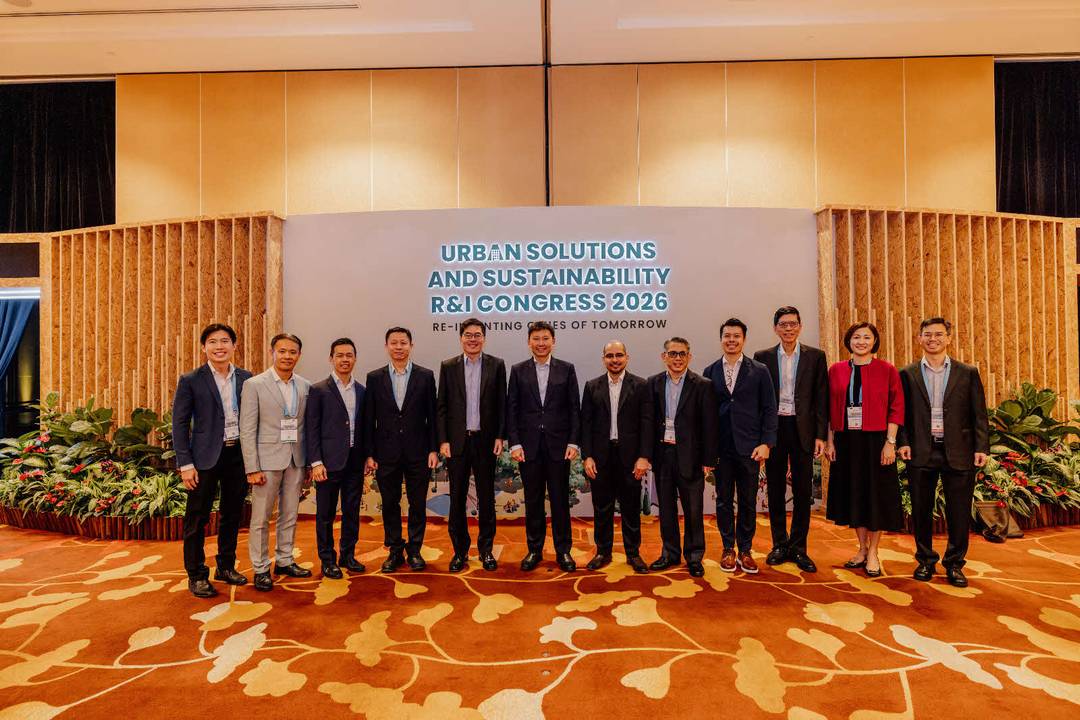
The USS R&I Congress, co-organised by MND and MSE with the support of partner agencies, took place from 5–6 Feb 2026 at the Marina Bay Sands Expo and Convention Centre, Singapore. The event served as a national platform to discuss Singapore’s urban sustainability challenges and potential R&I responses.
The two-day event brought together key stakeholders in the urban sustainability ecosystem to collaborate on R&I efforts in priority areas identified by the Government. Its theme, “Re-inventing Cities of Tomorrow”, reflected the importance of harnessing technology and innovation to reimagine and reshape the future of Singapore’s urban environment.
In his opening speech, Minister for National Development, Mr Chee Hong Tat, highlighted the importance of research and innovation to maintain Singapore’s competitive edge and ensure a high-quality living environment for Singaporeans. He announced the following key initiatives to accelerate the translation of research and innovation into meaningful, real-world outcomes:
USS Translation Fund
The USS Translation Fund is a new $40 million funding programme by the Ministry of National Development (MND) and the Ministry of Sustainability and the Environment (MSE) to support local companies develop, pilot, and commercialise promising urban and sustainability solutions.
Administered by the USS Innovation & Enterprise Office (USS IEO), a national platform hosted by A*STAR, the fund helps companies translate high-potential USS research into cost-effective market-ready products. By supporting the commercialisation of innovative solutions, the Fund creates potential business opportunities across key USS sectors, including the built environment, water, environmental services, and agri-food industries.
Streamlined Procurement of Research Innovations & Technology (SPRINT)
MND will launch a new green lane procurement programme, SPRINT, to streamline procurement and expedite government adoption of innovative research products.
SPRINT will be administered by HDB and BCA, and piloted by MND Family agencies. During the pilot phase, companies that meet SPRINT’s requirements become qualified vendors, enabling direct procurement by MND Family agencies. This streamlined process is expected to halve procurement timelines.
SPRINT will also help companies strengthen their credentials as part of the panel of qualified government suppliers, widen their market access, and build their industry track records. Beyond this, collaboration with the public sector enables these companies to strengthen their technical and research capabilities to develop impactful and scalable solutions for the public good.
Built Environment AI Centre of Excellence
MND, in partnership with the Singapore University of Technology and Design (SUTD), is launching a new $30 million Built Environment AI Centre of Excellence (BE AI CoE). This centre will foster collaboration between Government agencies, academia, and industry to develop AI-driven solutions that address key challenges in the BE sector, such as manpower shortages in the labour-intensive construction and facilities management sectors, and climate change impacts.
The CoE aims to transform work processes to enhance productivity, sustainability, and liveability whilst nurturing ‘AI bilinguals’—professionals with both technical AI expertise and practical understanding of BE sector challenges.
The desired outcomes for the BE AI CoE are to:
- Transform work processes throughout the BE lifecycle by developing AI solutions with needle-moving impact in terms of productivity, sustainability, and liveability.
- Catalyse public-private partnerships in applied AI research and accelerate research translation and time-to-market by establishing a focal point that brings together government, academia, and industry.
- Build up AI capabilities within Singapore’s BE ecosystem by developing deep local expertise and anchoring talents through the CoE.
Additionally, the Building and Construction Authority (BCA) launched a decarbonisation technology roadmap at the Heat Resilience Breakout session on 6 February 2026.
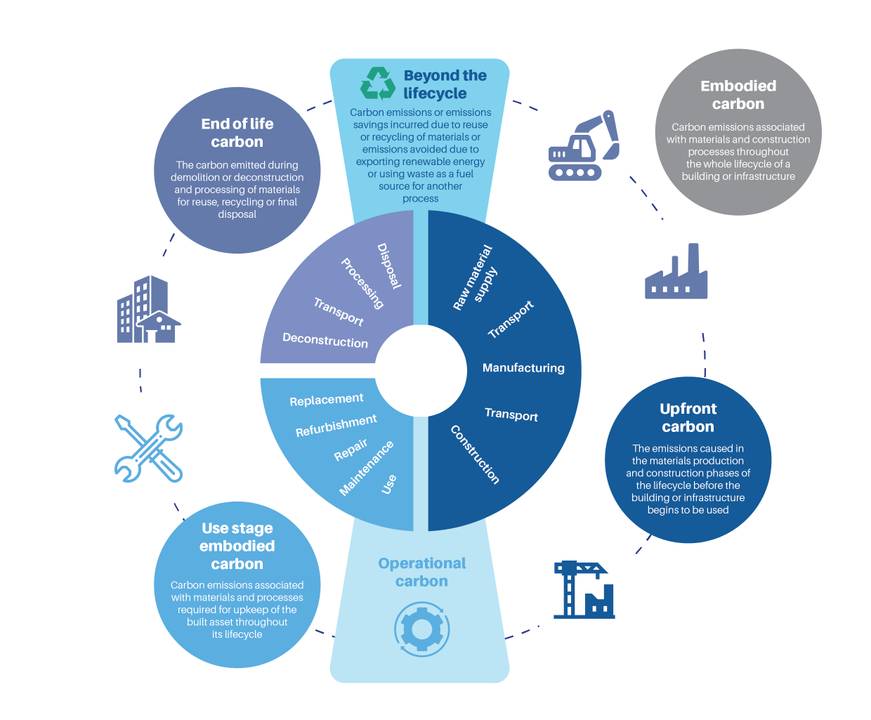
BCA and Singapore Green Building Council (SGBC), with support from A*STAR, jointly developed a roadmap that identifies close to 70 key technologies and strategies. This roadmap will guide research and innovation efforts towards achieving the Singapore Green Building Masterplan’s (SGBMP) “80-80-80” targets by 2030 and work towards the longer-term target for net-zero emissions by 2050.
Market-ready strategies and solutions, such as alternative cooling and ventilation technologies, AI-controlled energy optimisation systems, and low-carbon construction practices, will help developers and building owners decarbonise their building portfolios, while identified emerging technology priorities will support Singapore’s Research, Innovation, and Enterprise (RIE) 2030 plan.
The technology roadmap serves two primary purposes: firstly, it encourages stakeholders to leverage market-ready solutions to reduce whole-life carbon emissions in their building projects. Secondly, it provides the research community with a clear directive on emerging technology priorities.
More details about the roadmap can be found in the public report: https://go.gov.sg/decarbroadmap.