For decades, much of the construction industry in Southeast Asia has operated through fragmented coordination, experience-driven decision-making and limited digital integration. While this approach may still function on smaller developments, it is becoming increasingly difficult to sustain for modern large-scale projects, where speed, complexity, sustainability and coordination must all be managed simultaneously.
Thailand-based developer VillaCarte Group recognised this challenge early during the delivery of its flagship projects in Phuket – Layan Green Park and Layan Verde. Together, these projects feature more than 250,000 sq m of built-up area, combining hospitality, residential and infrastructure components within highly complex environments.
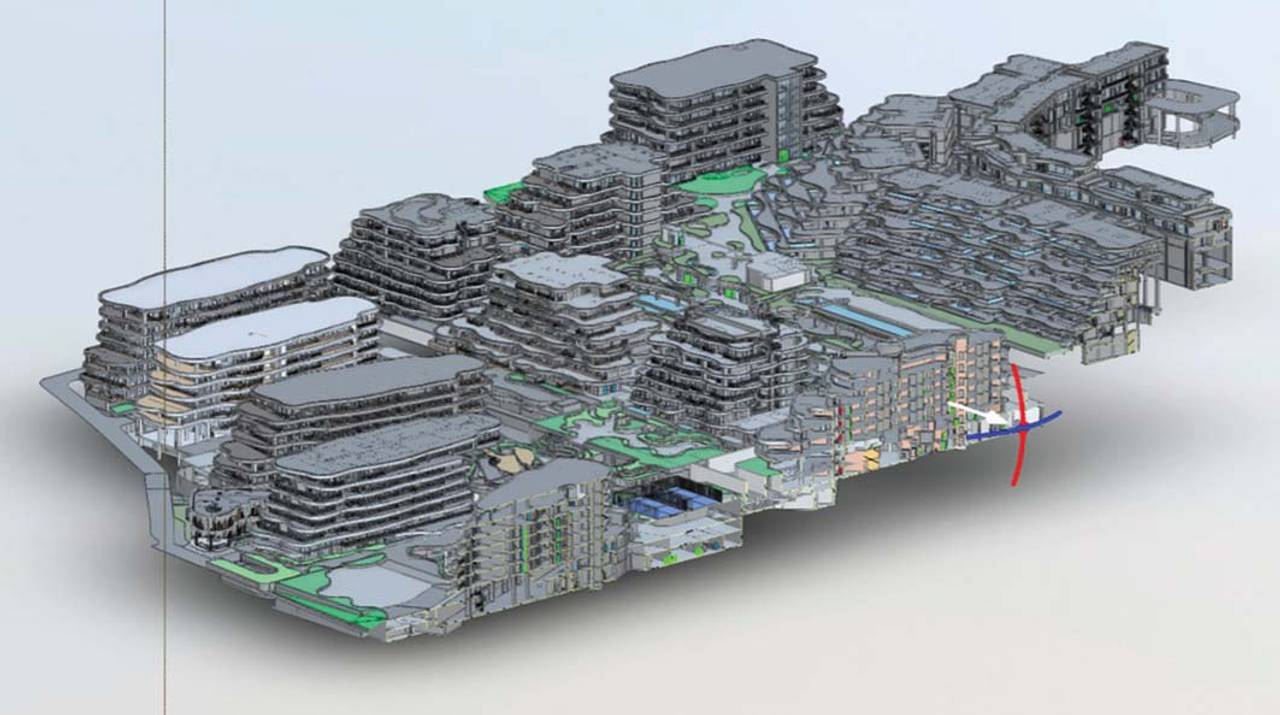
Layan Verde, in particular, stands out not only for its scale but also for the delivery model behind it – a developer-led, in-house construction and management approach designed to replace reactive construction practices with structured, data-driven execution. (Scroll down to view the project rendering.)
A project that demands a different approach
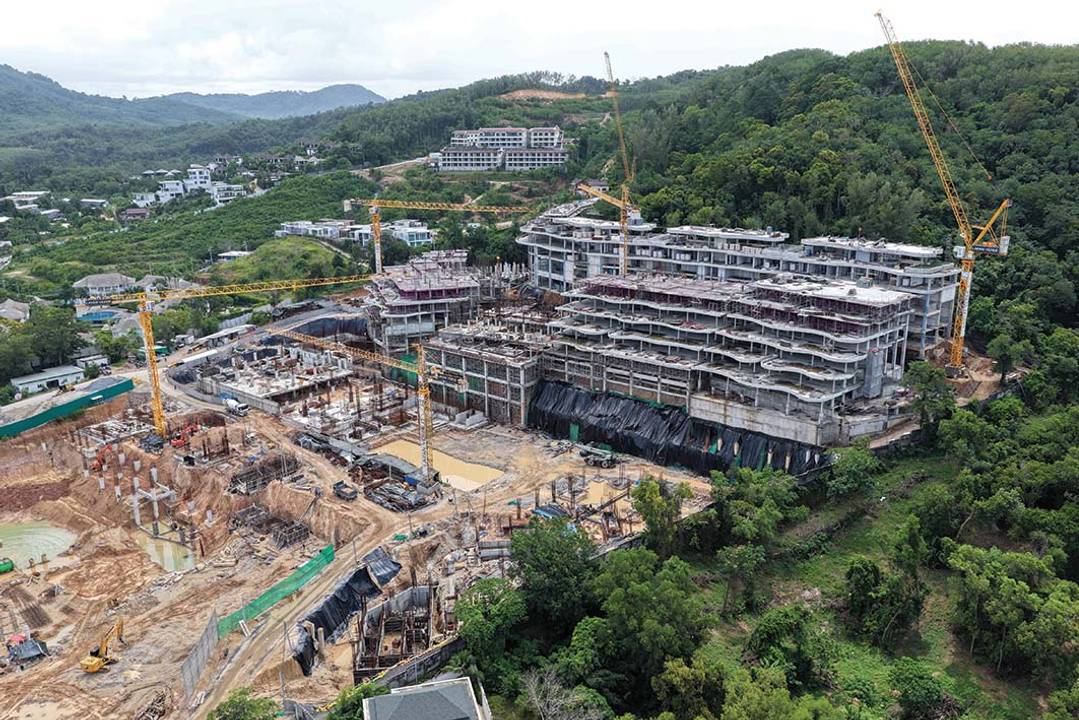
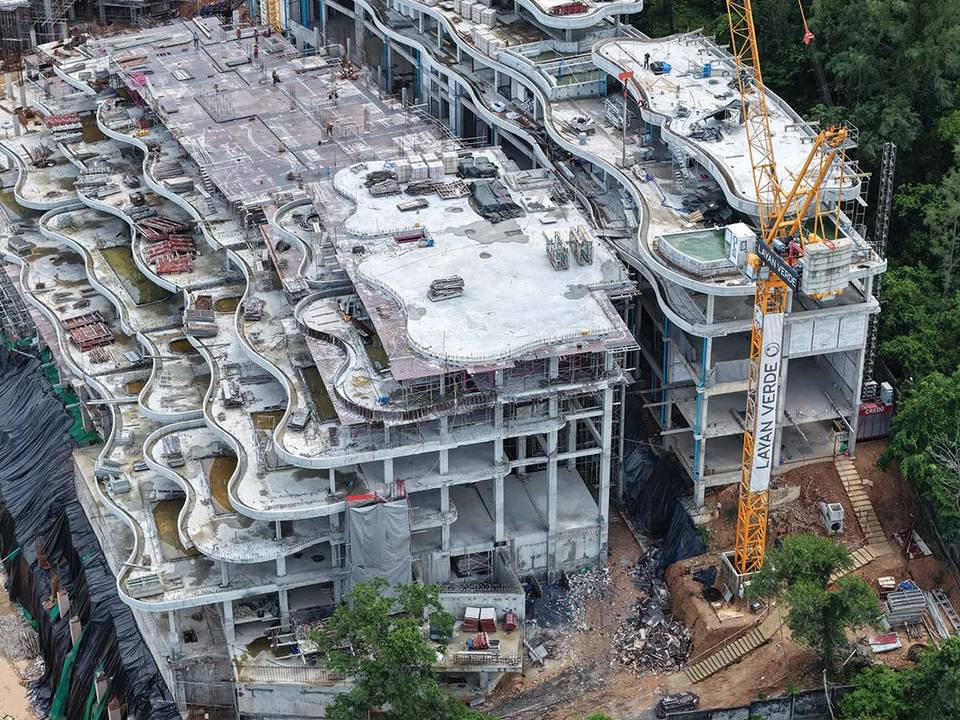
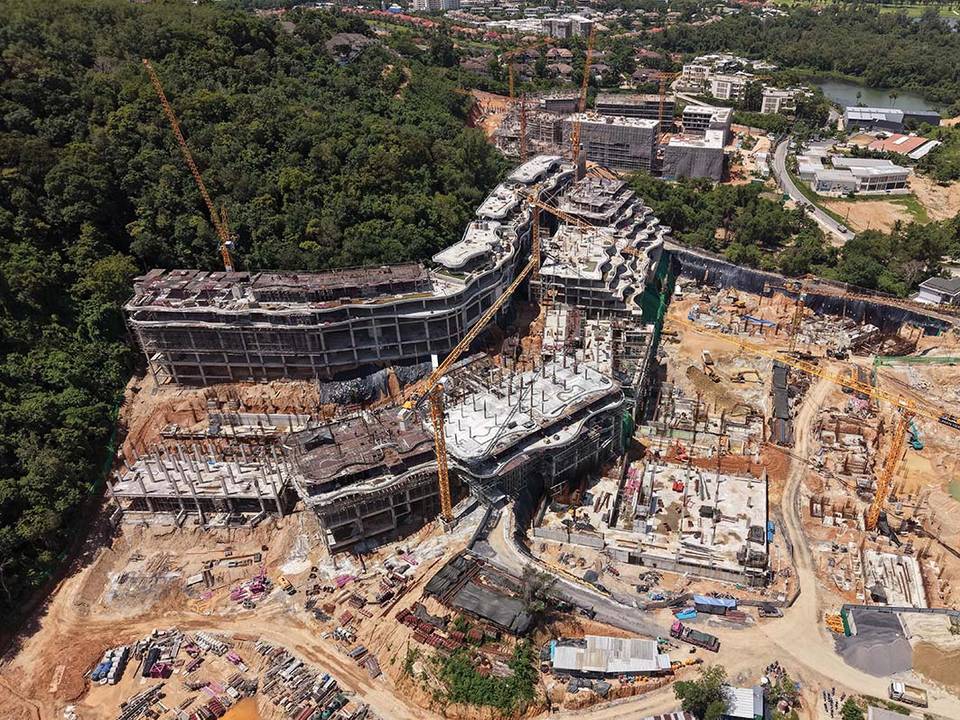
Spanning approximately 8 ha, Layan Verde is a large-scale integrated resort development comprising more than 15 buildings and a total built-up area of over 200,000 sq m. The project brings together residential and hospitality components within a single environment, requiring the simultaneous coordination of multiple workstreams.
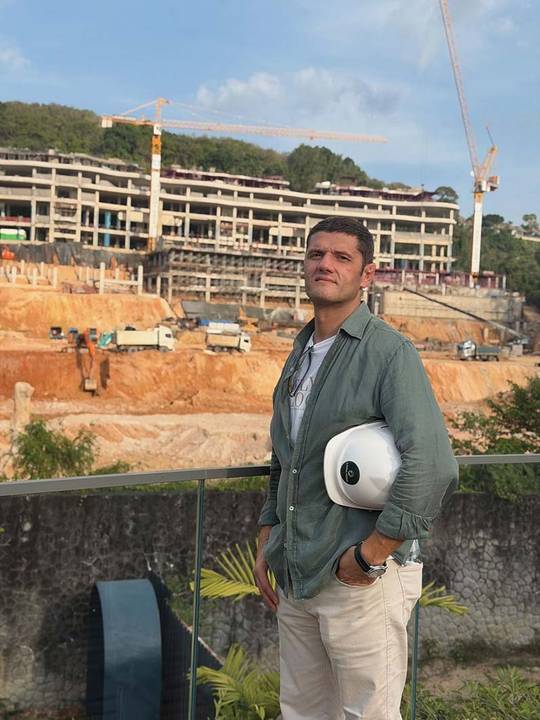
From a construction standpoint, the challenges are substantial. According to Arthur Karapetian, construction director at VillaCarte Group, the site involves extensive underground works and earthmoving operations exceeding 300,000 cu m, with elevation differences of up to 50 m across the site adding further complexity to logistics, access planning and structural coordination.
At peak activity, the project deploys a large fleet of heavy equipment, including six to eight tower cranes, multiple piling rigs, hydraulic hammers, and excavators working concurrently in different zones.
“As the in-house construction management team at VillaCarte recognised early in the project, conventional delivery models would not provide the level of control required for a development of this scale and complexity. We needed a system that connects design, procurement, construction, quality, cost control and scheduling into one coordinated delivery process,” said Mr Karapetian.
The real challenge: changing the way teams work
While technical complexity is visible, Mr Karapetian revealed that one of the most significant challenges was internal. “The construction market across much of Southeast Asia remains conservative, with digital adoption progressing relatively slowly compared with other industries,” he noted. “Many contractors still rely on fragmented workflows, manual coordination and experience-based decision-making rather than structured systems.”
Introducing platforms such as PlanRadar, BIM-based coordination, and performance tracking systems therefore required more than technical implementation – it required a shift in mindset, stressed Mr Karapetian. “Resistance during the early stages was expected, as many contractors were unfamiliar with structured digital workflows and initially viewed them as additional administration rather than operational tools,” he explained.
To address this, VillaCarte’s in-house team focused heavily on education, training and practical implementation. Contractors were gradually integrated into unified workflows, including earned value-based quarterly performance tracking and digital QA/QC processes.
“Over time, these systems became embedded in daily operations. Today, all major contractors on the project operate within a shared digital coordination environment – something that was not common practice in the local market when the project began,” said Mr Karapetian, emphasising that “digital tools alone do not transform construction; disciplined implementation does. The real change happens when contractors, engineers and managers use the same system every day and make decisions based on reliable data.”
Developer-led delivery: taking control of complexity
A critical decision early in the project was to adopt a developer-led, in-house construction and management model. Instead of relying entirely on external consultants, VillaCarte established a dedicated internal team responsible for design coordination, procurement, construction management, scheduling, cost control and quality assurance/quality control (QA/QC).
This structure enables a significantly higher level of control over delivery. According to Mr Karapetian, key coordination issues are typically resolved within a 48-hour timeframe, allowing construction activities to progress without prolonged delays in decision-making.
“The objective was never simply to digitalise reporting, but to fundamentally change how construction decisions are made and executed on site,” he said. The team operates through structured workflows, standardised procedures and measurable performance indicators, ensuring alignment across multiple contractors and workstreams. The result is a delivery system where construction is actively managed rather than passively monitored.
Digital transformation
Mr Karapetian explained that digitalisation forms an integral part of the project delivery system. BIM coordination provides a unified 3D environment for all disciplines, improving design alignment, clash detection and construction sequencing.
This is complemented by laser scanning using Faro systems, enabling accurate verification of as-built conditions and creating the foundation for digital twin workflows. The project already operates within a fully integrated 3D coordination environment, with further development towards 4D and 5D BIM integration – linking scheduling and cost control directly to model data – planned as the next stage of implementation.
QA/QC processes are managed through PlanRadar, supported by the SiteView 360 framework for quality and performance control. QR-based tracking allows real-time visibility of inspections, approvals and defects at the unit level, promoting greater transparency and accountability among contractors.
“This combination of tools transforms construction management from reactive oversight into data-driven control,” said Mr Karapetian.
Innovation on-site and sustainability
Alongside digital systems, the project is actively exploring new construction technologies. One example is the planned deployment of robotic painting systems, following VillaCarte’s engagement with technology providers at industry events in Singapore. Scheduled for implementation later this year, the solution is expected to improve consistency in finishing quality, reduce material consumption and increase productivity.
“Compared with traditional manual methods, robotic systems can operate continuously while maintaining uniform application quality and reducing dependency on large labour teams for repetitive tasks,” noted Mr Karapetian. “This reflects a broader transition towards automation and technology-driven construction processes – an area that remains relatively new within the regional market.”
He further pointed out that the combination of structured processes and digital systems has resulted in stable and measurable performance outcomes. Schedule performance remains consistently at target levels, with SPI (schedule performance index) maintained at around 1.0 and not falling below 0.98 under internal methodology, while CPI (cost performance index) is approximately 1.06, demonstrating controlled cost efficiency.
In addition, defect levels have been greatly reduced through early-stage identification and coordinated workflows, minimising rework and improving overall construction quality.
On sustainability, Mr Karapetian said it was approached not as a marketing tool, but as a core project delivery principle. VillaCarte previously achieved EDGE Advanced certification for Layan Green Park Phase 1 – one of the first developments in Phuket to reach this level – with measured performance indicators including 47% energy savings, 25% water savings and 41% lower embodied energy in materials.
The developer is also exploring advanced bio-solar roof concepts, integrating photovoltaic systems with extensive green roof environments designed specifically for tropical climate conditions. These systems improve airflow beneath solar panels, minimise heat accumulation, support biodiversity and enhance photovoltaic efficiency, while contributing to long-term environmental resilience.
For Layan Verde, one of the key sustainability challenges is not only reducing resource consumption, but also integrating a large-scale development into Phuket’s natural landscape in a way that preserves and enhances the character of the site.
This experience established an operational benchmark for future developments and is now being integrated into Layan Verde through energy-efficient design strategies, renewable energy infrastructure, water reuse systems, and operationally focused sustainability planning embedded directly into construction delivery.
Renewable energy integration has become a major part of the long-term operational strategy. Mr Karapetian shared that approximately 1,000 sq m of solar panels were installed in Layan Green Park Phase 1, increasing to approximately 1,500 sq m in Layan Green Park Phase 2, and more than 5,000 sq m is planned for Layan Verde.
Raising construction standards
The impact of this approach extends beyond a single development. Mr Karapetian highlighted that by implementing structured workflows, introducing digital systems and working closely with contractors to build capability, the project contributes to raising overall construction standards within the local market.
VillaCarte also actively participates in knowledge-sharing initiatives and developer-focused industry events, where practical experience and implementation strategies are shared with peers across the region.
“Companies that continue to rely on outdated delivery models will inevitably fall behind, as the industry moves towards system-driven construction,” said Mr Karapetian. “Large-scale construction projects today require a fundamentally different approach. Traditional methods – fragmented coordination, reactive problem-solving and limited use of data – are no longer sufficient to manage the complexity of modern integrated developments.”
“The future lies in integrated delivery models that combine strong in-house management, digital systems, innovation and disciplined execution,” he concluded. “Projects such as Layan Verde demonstrate that when complexity is managed as one coordinated system — combining people, technology, engineering and disciplined execution — large-scale construction can be delivered with a level of control, consistency and predictability that traditional methods simply cannot provide.”
All images: VillaCarte Group
Note: This story has also been published in the Jul/Aug 2026 issue of SEAC (with more images). Click here to read it online or here to download the PDF (pages 30-35 and 37).