
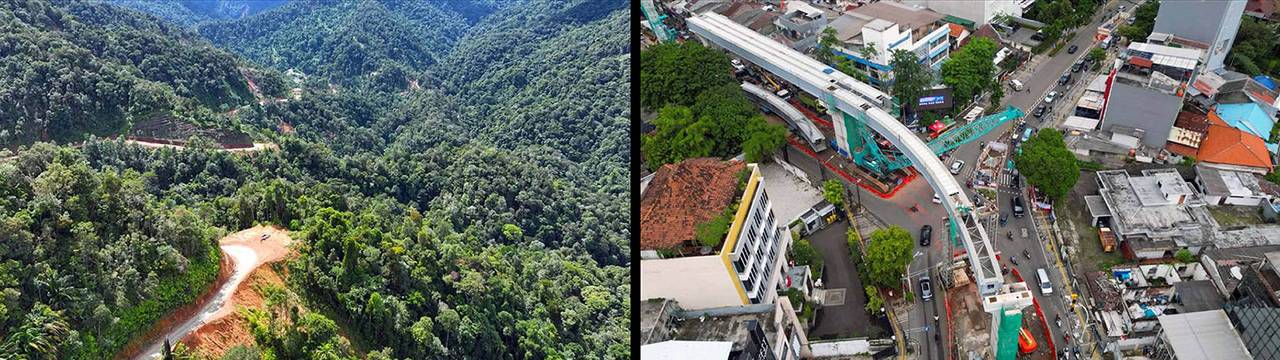
With countries around the world – including many in Asia – investing in transportation infrastructure such as bridges, tunnels, railways, roads and airports, artificial intelligence (AI) is increasingly being used to develop more resilient projects capable of withstanding severe weather events, like earthquakes, storms, extreme heat and floods.
“If 100 years ago a bridge was supposed to last for 50 years, nowadays it should last for 100-200 years. And in order to do that, we must be able to somewhat predict the conditions under which the infrastructure will operate; this is where AI plays a role,” said Dustin Parkman, vice president, industry solutions group at Bentley Systems, in a recent interview with SEAC.
“We also have ageing infrastructure in many parts of the world, which is under conditions that it was never prepared for. So, AI can help extend the service life of this existing infrastructure,” he added.
“With AI, we can bring in a lot more scenarios around different types of weather patterns and conditions, to get the best predictive model that will support engineering decisions.”
“Over-engineering to some extent is not a bad thing,” said Mr Parkman, who has long been involved in developing technology that allows engineers, contractors and project owners to automate the construction and operation of infrastructure.
“Today’s climate is making the external conditions of our infrastructure worse. On top of that, we’re facing more challenges than ever before, including lack of funding and workforce constraints,” added Burak Boyaci, senior director, software development at Bentley Systems, who currently leads the company’s civil engineering group. “Therefore, whatever we create today has to last longer.”
One modern example of infrastructure designed for long-term durability is the Chenab Railway Bridge in India, which was just opened last year. Dubbed the world’s highest single-arch railway bridge, situated in the treacherous Himalayan terrain, it has a design life of 120 years and can withstand harsh environmental conditions.
Mr Boyaci stressed that, moving forward, engineers should use AI to “predict the future conditions of infrastructure – what could happen in the next 100 or 150 years, and then make the right decisions at the beginning, in order to prevent costly rework later on.”
‘The more detailed we model, the better we understand’
As an engineer, Mr Boyaci highlighted two key aspects essential for project success. “First, the human aspect: we need to educate people on how to design and build resilient, sustainable infrastructure. Second, the technology aspect: it enables us to run various simulations and explore alternative solutions in the early stages, which help minimise risks.”
Mr Parkman noted that the underlying issue in infrastructure development typically “has a lot to do with governance, restrictions, contracts, geopolitics, or legal issues. All those peripherals drive up the cost of the project and delay the completion time.”
“By virtually simulating the design and construction process, we can reduce the cost and mitigate the risks,” he pointed out. “The more detailed we can model infrastructure, the better we can simulate and understand its performance, not only as-built but also post-built – how it’s going to react in that ecosystem, what impact it’s going to have on the environment, and how it’s going to respond to massive seismic or flooding conditions. If we can sort all that out upfront in the early stages of preliminary and conceptual design, we can save up to 10 times in construction costs.”
Improving engineering productivity
Although AI technology is still relatively new to the engineering and construction sectors, numerous companies have already adopted it to enhance the quality and efficiency of their projects.
Bentley’s Going Digital Awards 2025 saw nearly one-third of award submissions – and almost half of finalists – incorporating AI into their projects to save costs, manpower and time. In Asia, Korean giant Samsung C&T Engineering & Construction has announced its transition to becoming an ‘AI-native’ construction company, while Singapore has recently established the Built Environment AI Centre of Excellence and unveiled plans to develop AI capabilities nationwide.
As AI progresses and companies continue to implement it more widely across their business functions, the big question is – will AI take over engineers?
“I don’t think AI will replace engineers, but it will increase their work productivity. The technology will enable engineers to make better, more informed decisions early on, so that they can focus on higher-value activities instead,” said Mr Boyaci. “At the end of the day, engineers will remain accountable for the project.”
“AI will help them remove all the tedious, mundane tasks,” explained Mr Parkman. “If engineers didn’t have to worry about creating drawings, or generating a bunch of paperwork and reports, they can spend more time in the early phases of engineering, especially during conceptual design.
“[The early phases] are the most critical stages of engineering because that’s when they get to explore so many alternatives. Imagine if you could explore thousands, or even millions, of options to achieve a result that’s going to be 10 or 20 times better than the current state of the art? I think that’s the opportunity.”
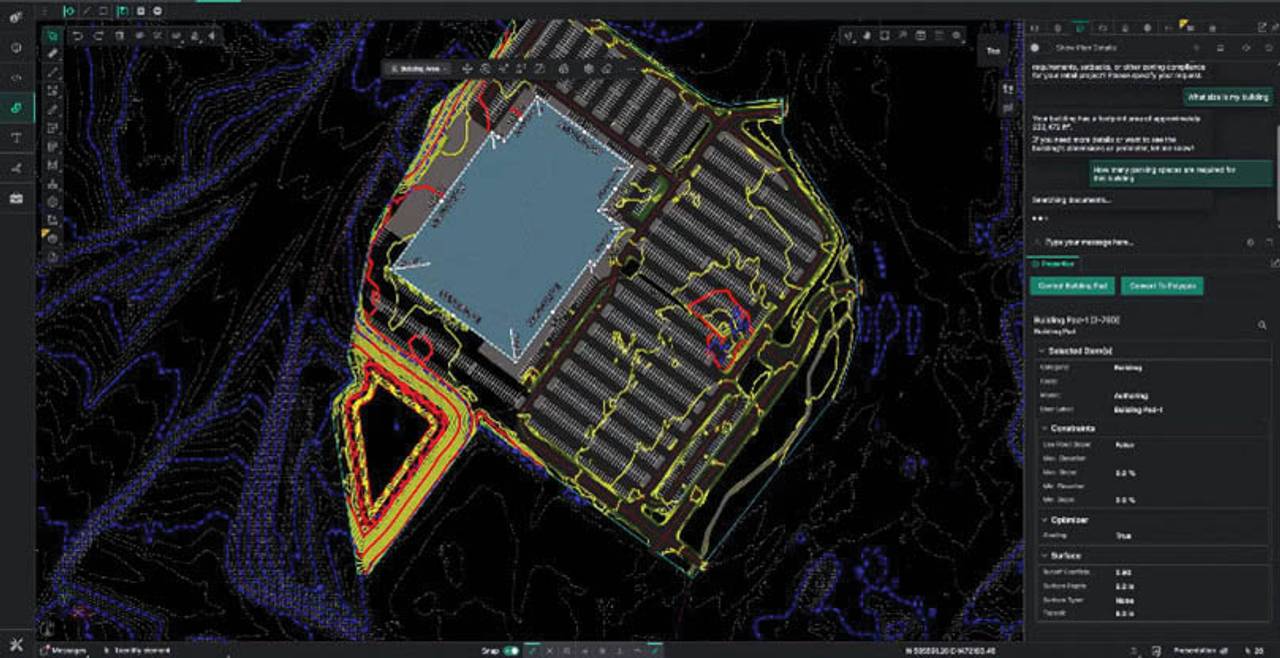
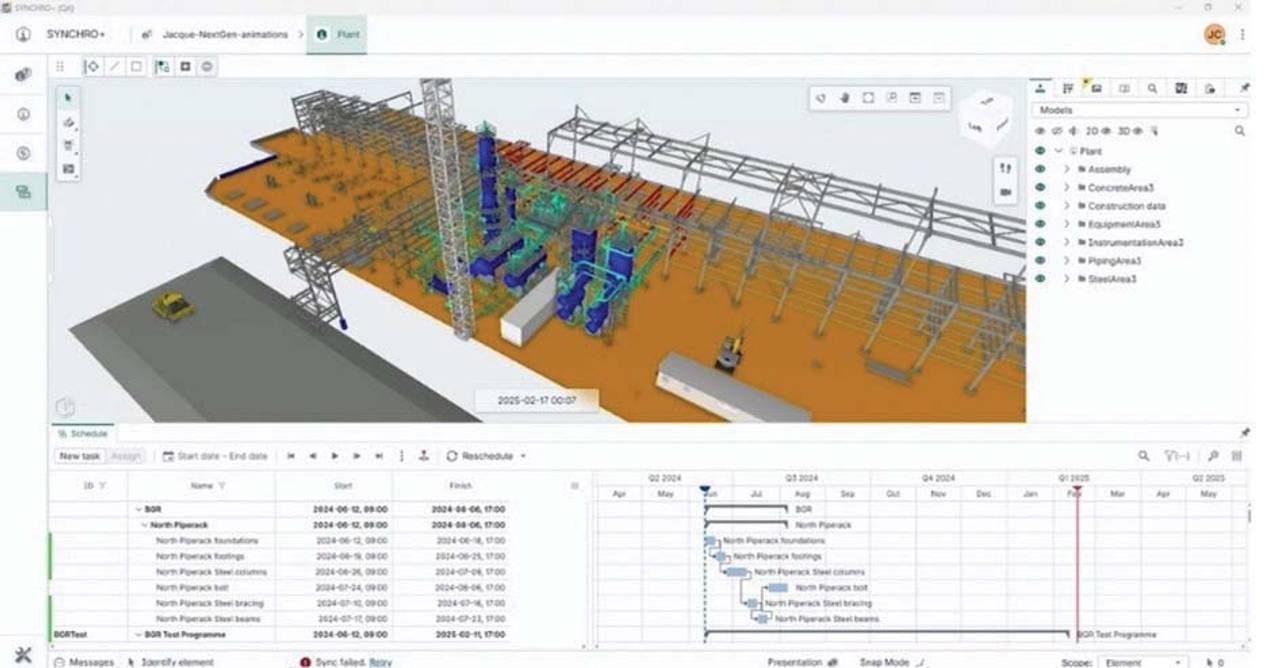
To help engineers improve their workflows and boost productivity, Bentley has introduced a number of AI-powered solutions. Among them are: OpenSite+, the company’s first engineering application leveraging generative AI for civil site design that can deliver projects up to 10 times faster; OpenUtilities Substation+ for substation design; and Synchro+ to streamline construction planning and coordination.
With data becoming pivotal in engineering and construction, Bentley CEO Nicholas Cumins has reaffirmed the company’s approach to infrastructure AI and the importance of respecting intellectual property. “Our users are in control of their data. They decide if it is used for AI training, and to what extent,” he said during the Year in Infrastructure (YII) 2025 conference. “Our users’ data is their data, always.”
On the uncertain future of climate change impacts, whether AI has the ability to forecast beyond historical patterns, Mr Boyaci said, “AI definitely can run all those scenarios, present multiple possibilities, and provide the costs and trade-offs for each scenario. Using these statistical analyses, engineers can make better choices supported by data.”
“It’s a matter of confidence interval, how wide do you want to go in that bell curve,” added Mr Parkman. “If you have the time and sufficient resources, you can conduct these analyses now. But what AI is going to do is allow you to perform the same tasks much faster and more cost-effectively.”
Image credits:
Images 1, 2, 4 & 5: Bentley Systems
Image 3: Jabatan Kerja Raya Sarawak (left) and PT Waskita Karya (Persero) Tbk